
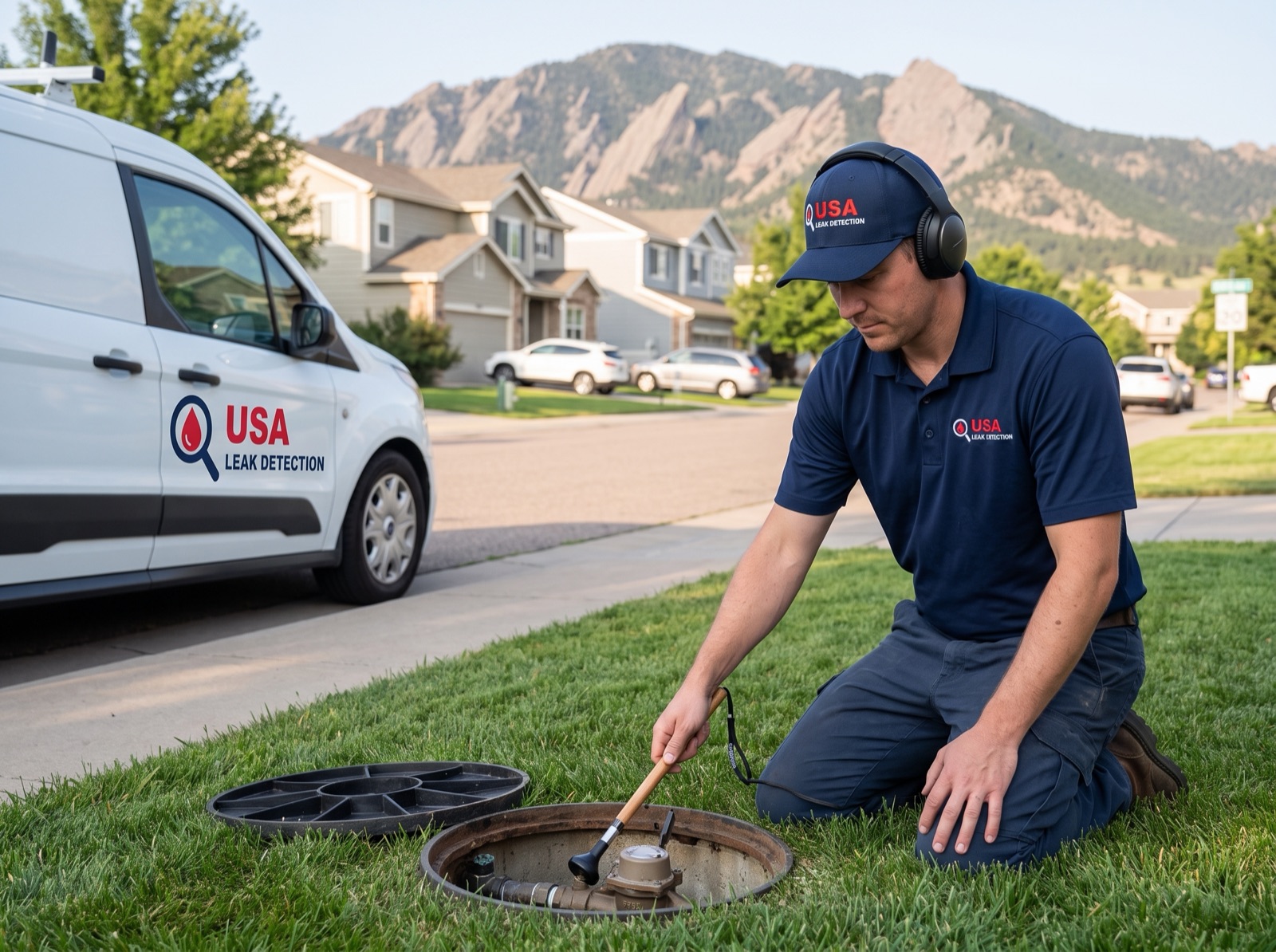
In Denver, swelling clay stresses slabs and buried lines. Our office is on East Evans Avenue in southeast Denver, and our team works across the city. This page covers how we test, the tools we use, and the signs of a hidden leak. Clay movement can crack slab lines, and leaks hide under floors until they stain.
We confirm the leak first, so the repair hits the right spot. Call (303) 953-8631 or request a visit to book one.
Hidden Pipe Leaks Are Found by Testing, Not Guessing
Confirm the leak before anyone opens a wall or a slab. Shut off every fixture, then read the water meter. If the meter still moves, the leak is in the supply line, not the fixtures.
Pressure testing isolates the leak to one run of pipe. Listening devices then narrow the exact spot before any cutting starts.
If you notice a damp floor, a high water bill, or running water with nothing on, start with a test. If the drip sits at one faucet instead, see our faucet leak detection page. The repair goes only where the leak is, so less floor or wall comes out. Supply lines often run inside slabs and walls, so testing has to come before cutting.
A sink leak is the first guess, but the meter tells the real story. Read it before you open anything.
Denver’s Clay Soil Often Causes Slab and Under-Slab Pipe Leaks
Swelling clay underlies all of the major cities in the Front Range Urban Corridor, including Denver.[1] The clay swells when it gets wet after a dry spell. Colorado’s seasonal moisture swings make swelling far more common than in wetter states.
That movement can crack slab lines and pull joints apart, hiding the leak under the floor. The Colorado Geological Survey calls swelling soil one of the most significant, widespread, and costly geologic hazards in Colorado.[1]
Most of the time, a slab leak shows as a warm or damp spot before any stain. Mark that spot and test before anyone pulls up flooring. Catching it early keeps the repair focused on the one line.
If you see cracked tile or a warm spot on the slab, test before you repair. A water bill that climbs with no change in use is a sign too. If the leak sits under your concrete floor, start with our slab leak detection service.
Frozen Water Lines Often Leak Once the Ground Thaws
Denver’s frost line is 36 inches below finished grade. Water lines buried shallower than that can freeze. Denver’s building code lists a winter design temperature of 1 degree F.
Lines buried shallower than that, or run through unheated garages and crawl spaces, are at higher risk. A frozen line can split without a leak at first. The break shows when the ground thaws and water escapes. Knowing that pattern lets the crew check the likely break points first.
If you see spring wet spots or a leaking outside spigot, call us. A crawl space leak after a hard cold snap is worth a call too.
Freeze splits tend to show where a line enters from outside or runs along an unheated wall. We check those spots first.
The Tools Plumbers Use to Find a Pipe Leak
Pressure gauges show whether a line holds. Listening devices pick up water noise through walls and slabs.
Thermal cameras and electronic tools flag warm or wet zones. Each tool answers a different question. Is there a leak? Roughly where? Exactly where?
Before you agree to an open-wall repair, ask which tool confirmed the leak. A visual check cannot see under a slab, so listening and thermal tools do more of the finding. Knowing the tools shows what a complete leak visit includes.
Keep in mind that a thermal camera marks a warm zone, not the pipe itself. Confirm with listening before anyone cuts.
How Underground Pipe Leaks Are Pinpointed
Underground leaks show as wet ground, soft spots, or a patch of grass that stays greener than the rest. Pinpointing starts with a pressure test to confirm the buried run. Listening equipment then narrows the spot before anyone marks the line.
Older homes in Park Hill and Washington Park can have galvanized supply lines that corrode from the inside. Denver’s clay soil moves with moisture, and that same movement can stress buried lines.
If you have a wet yard or a rising water bill, start with a leak visit. The same goes for a suspected line from the meter to the house. Marking the path first keeps the dig small and on target.
What homeowners don’t realize is that a dig on a guess costs more than the test. Dig only after the listening spot and the marked line match.
How Does Pipe Leak Detection Work in Denver?
A pipe leak visit follows these six steps:
- Shut off all water and read the meter to confirm a leak.
- Pressure test the line to isolate the leaking run.
- Listen with acoustic devices to narrow the spot.
- Scan warm or wet zones with thermal or electronic tools.
- Mark the pipe path before any cutting or digging.
- Repair the confirmed spot, then retest the line.
Pressure testing happens before any wall or slab opens, so the repair targets the confirmed spot.
Frequently Asked Questions
What Device Can Detect a Pipe Leak?
A device can detect a pipe leak by listening for water noise or by measuring pressure in the line.
How Can I Detect a Leaking Water Pipe?
You can detect a leaking water pipe by watching the meter with all water off, then booking a pressure test.
How Do You Tell If a Pipe Is Leaking Underground?
You tell if a pipe is leaking underground by wet ground, soft spots, or a meter moving with fixtures off.
How Long Can a Water Leak Go Unnoticed?
A water leak can go unnoticed for a long time when it runs under a slab or inside a wall.
What Tool Do Plumbers Use to Find Leaks?
Plumbers use pressure gauges, listening devices, and thermal or electronic tools to find leaks.