
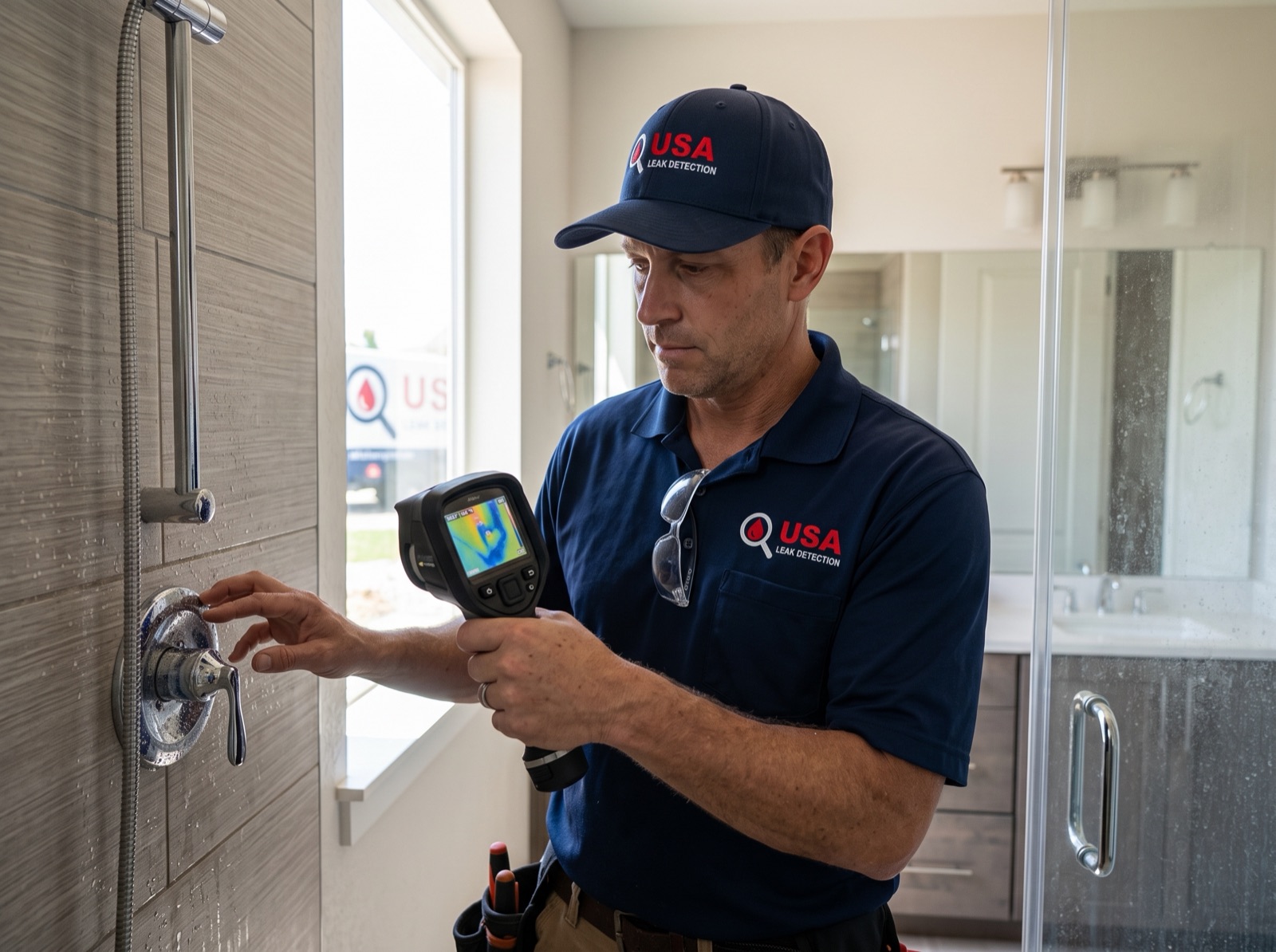
In Denver, bathroom leaks can start with swelling clay soil [1] and hard mountain water. Our office is on East Evans Avenue in southeast Denver, and our team works across the city. This page covers how bathroom leaks show up, where they start, and how leak detection finds the real source. Call (303) 953-8631 and describe the symptoms. We find the source before anyone plans a repair.
How Does Bathroom Leak Detection in Denver Work?
Bathroom leak detection in Denver narrows the search one fixture at a time.
- Dry the bathroom floor and note where water returns first.
- Check the toilet base, tank, and supply line for moisture.
- Inspect the tub and shower valve for drips, cracked grout, or a gap at the wall.
- Check the drain and the wall behind the fixture for stains or soft spots.
- Test the supply and drain lines separately to see which one is losing water.
- Check fittings on older galvanized or polybutylene supply lines, where leaks often start.
Toilet Leaks Often Start at the Base or Tank
A toilet can leak from the base, the tank bolts, or the supply line. Water at the base often points to a failed wax ring or a loose closet bolt. Water at the tank usually means a worn seal or fill valve. Finding the exact leak point shows whether the fix is a seal, a bolt, or a valve.
One thing we see on Denver toilet calls is a bowl that rocks on the floor. That movement stresses the seal, so it is worth checking early.
Water on the Bathroom Floor Can Come From Several Sources
Water on a bathroom floor can come from the toilet, the tub, the shower pan, or a supply line. The puddle you see is rarely the source. Water travels along the subfloor before it shows up on the surface. Tracing that path keeps you from tearing out the wrong part of the floor.
What homeowners don’t realize is that a remodel rarely matches the original drain and vent layout. On older Park Hill and Washington Park homes, new tile can hide an old line. The water can show up two rooms away.
Wall Leaks Show Clues Before Water Appears
Wall leaks rarely show water right away. They show up first as soft drywall, stains, bubbling paint, or a musty smell. Those clues point to the wall that holds the leak. So catching it early keeps the repair small and limits damage. When the water comes from a supply line inside the wall, pipe leak detection can trace it.
One thing we see on Denver bathroom calls is grout that cracks near the tub. Cracked grout and a tub pulling away from the wall mean the house is already moving.
Denver Clay Soil and Cold Winters Stress Bathroom Lines
Swelling clay underlies Denver and the rest of the Front Range. Clay swells when it gets wet. Colorado’s seasonal moisture swings make it far more common than in wetter states [1]. On a slab, that movement stresses the drain under the bathroom floor and the seals at the tub and shower. If your bathroom sits on a slab, slab leak detection can check those lines.
Cold snaps can freeze supply lines in exterior walls and unheated spaces. Both problems show up as bathroom leaks. One thing we see on Denver calls after a hard freeze is a split line along an exterior wall. Knowing which lines run through risky spots tells you where to look first.
A Leaking Toilet Needs Attention Soon, Not Later
A slow toilet leak can soak the subfloor and rot it over time. Water that reaches the floor, the subfloor, or the ceiling below makes the leak urgent. Acting early limits subfloor damage and keeps the repair focused on one part. Homeowners in Stapleton or Green Valley Ranch who see water at the base should not wait.
We see fill valves wear out early when water pressure runs high, and braided supply lines fail the same way. Check for a pressure regulating valve before you replace the same line again.
Finding the Exact Source Prevents Repeat Repairs
Leak detection finds the real source before any repair starts. But swapping parts without a source leads to repeat calls and wasted money. One clear source means one targeted repair. Denver’s mountain water builds scale on shower heads, faucet aerators, and valve cartridges. That scale can look like a pipe leak.
One thing we see on tub calls is a drip that is really a worn cartridge. That drip is worth a check with faucet leak detection before anyone opens a wall. If the water traces back to a slow drain, see drain leak detection. To get your bathroom checked, call (303) 953-8631 or contact our team.
Frequently Asked Questions
How Do You Check If There Is a Leak in Your Toilet?
You check if there is a leak by drying the base and tank, then looking again after a few hours.
How Do You Tell Where a Bathroom Leak Is Coming From?
You tell where a bathroom leak is coming from by tracing the water path, not by following the wet spot.
Why Is There Water on My Bathroom Floor If There Is No Leak?
There is water on your bathroom floor with no leak when condensation or tub splash is at work.
What Are the Common Causes of a Toilet Leaking From the Bottom?
The common causes of a bottom leak are a failed wax ring, loose closet bolts, and a cracked floor flange.
How Urgent Is a Leaking Toilet?
A leaking toilet is urgent when water reaches the floor, the subfloor, or the ceiling below.
Does Home Insurance Cover Leak Detection?
Home insurance may cover leak detection, depending on your policy and the cause of the leak.