
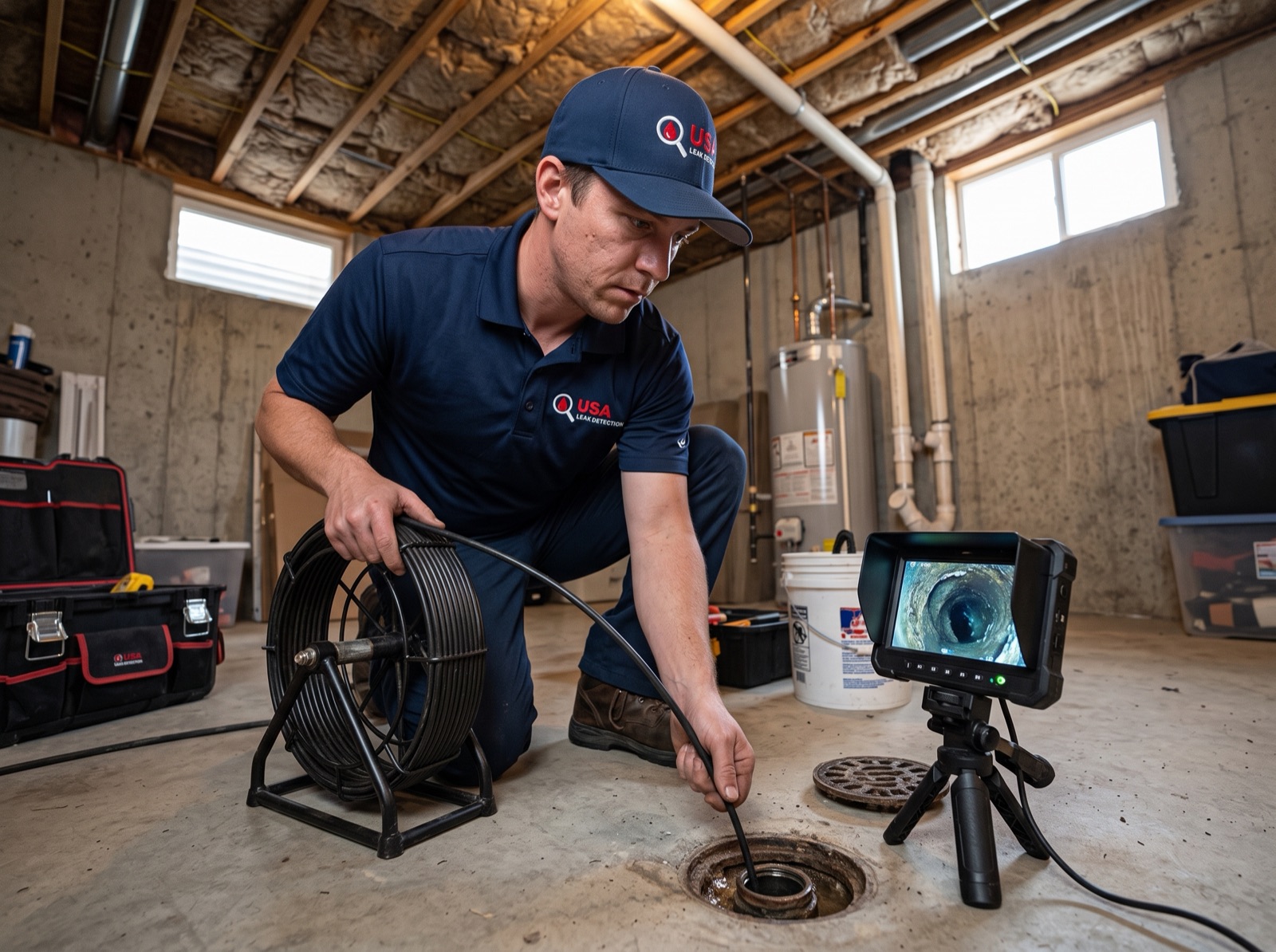
Our team works across Denver, and our office sits on East Evans Avenue in southeast Denver. In Denver, drain leaks hide under slabs and in yard lines. Two things work against those drains: swelling clay, and a frost line that sits 36 inches below finished grade.
This page covers drain and sewer line leaks, camera inspection, and dye and smoke testing. We start with the cause, not a guess. Not sure which kind of leak you have? Start with our home leak detection overview. Call (303) 953-8631 to book an inspection before anyone digs.
How Do Plumbers Find a Drain Leak in Denver?
Here is how we find it, step by step:
- Ask for symptoms: slow drains, gurgling, damp spots, or a sewer smell.
- Check the roof vent for snow or ice blockage, since a blocked vent can look like a clog.
- Run a camera through the drain line to find cracks, offsets, or failed joints.
- Confirm the spot with dye or smoke testing.
- Show the leak point on camera footage before any digging starts.
Signs a Drain Is Leaking Under Your Denver Home
Drain leaks rarely show a puddle first. Watch for slow drains that keep coming back, gurgling after flushes, and a sewer smell. A damp spot in the yard or a soft floor is worth a call too. If the water comes from a supply line instead, see our pipe leak detection page.
Catching a leak early keeps the damage in a smaller area. And that means a shorter repair.
Stapleton and Green Valley Ranch were mostly built from the 1990s on. Their drain lines are usually PVC. The weak point is often a fitting or a glued joint.
What homeowners don’t realize is that a drain can gurgle with no clog at all. That often points to a blocked roof vent, not a line leak. Check the vent before you blame the drain.
How Plumbers Find the Exact Point of a Drain Leak
We start with the symptoms and the layout of your home. Then we run a camera through the drain line to see the inside of the pipe. Once we find the spot, the cuts stay small.
That means fewer holes and a clear target for the repair. Cleanouts and yard drain stubs set shallower than 36 inches sit in the freeze zone. We check those access points first. But the camera always goes in before any cut.
What Camera, Dye, and Smoke Testing Reveal
A camera shows cracks, offsets, root intrusion, and sagging pipe on screen. Dye shows where water escapes from the line. Smoke shows where air escapes through a broken joint or vent.
You get clear evidence of where the leak is before any repair starts. In Denver’s clay, a shifted line often shows as an offset at a slab joint or in a yard.
Why Denver Drain Lines Fail Under Slabs and in Yards
Denver drain lines take three hits. Swelling clay moves slabs, frost stresses yard lines, and hard water builds scale inside the drain. This matters most for owners of slab homes, older yard sewer lines, and drains that slow down again and again.
Knowing the local cause helps the repair match the real problem. If the leak sits in the slab itself, see our slab leak detection page.
The Colorado Geological Survey calls swelling soil one of the most costly geologic hazards in Colorado.[1] Clay swells when it gets wet and shrinks when it dries. The frost line sits 36 inches down, so drains set shallower than that feel the freeze.
In Washington Park and Park Hill, many homes date from the early and mid-1900s. Those houses often have clay, cast iron, or Orangeburg sewer laterals. Those old lines fail at their joints and crack under the yard, where you can’t see them.
Denver Water’s total hardness averaged 105 mg/L in 2025. Over the years, scale can narrow a drain line. A drain that keeps slowing down may be buildup. A camera shows whether it is buildup or a break.
On an old lateral, the weak spot is the joint where two sections meet.
What Happens When a Drain Leak Goes Unnoticed
Leaking drain water soaks the soil and wets the slab or crawlspace. It can also feed mold. Flooring and the subfloor take the damage first.
Homeowners with a repeat damp spot, a sewer smell, or a soft floor should act soon. Find it early, and the opening stays small. The repair stays short, too.
After wet seasons, clay soil holds moisture against the slab. That is why damp spots can linger in Denver homes.
Frequently Asked Questions
How Do Plumbers Find Out Where a Drain Leak Is Coming From?
Plumbers find out where a drain leak is coming from by checking symptoms, then running a camera through the line. We also check the roof vent, since a blocked vent can mimic a clog.
How Do You Tell If a Drain Line Is Leaking Underground?
You tell a drain line is leaking underground when slow drains, gurgling, or damp spots show up with no clog. A camera inspection confirms it.
What Happens If a Drain Leaks Under Your House?
A drain leak under your house happens quietly and keeps wetting the soil and slab until someone finds it. Flooring and the subfloor often take the damage first.
How Do I Find a Drain Leak That Is Not Visible?
You find a drain leak that is not visible with a camera inspection, dye testing, and smoke testing. Book an inspection through our contact page or call (303) 953-8631.
How Long Can a Drain Leak Go Unnoticed?
A drain leak can go unnoticed for a long time, especially under a slab or in the yard. Watch for slow drains, a sewer smell, or a soft floor as early signs.